Preparing Your Horse for Winter: A Practical Checklist
Get your horse ready for winter with this practical checklist: hay planning, water that stays ice free, shelter, blanketing, hoof care and senior tips.
Healthy horses cope with cold surprisingly well. A dry winter coat, plenty of forage and shelter from wind and rain let most horses handle temperatures that send their owners indoors. The trouble usually comes from a few predictable problems: frozen water, not enough hay, wet and muddy footing, and gradual weight loss hidden under a fuzzy coat. Preparing before the first hard frost makes winter safer for the horse and easier for you. Here is a practical checklist, starting in early autumn.
1. Check condition before the cold arrives
Horses entering winter in good condition, around a 5 on the common 1 to 9 body condition scale, have a useful reserve. Thin horses have less insulation and less margin, while overweight horses may benefit from losing a little over winter under veterinary guidance. In early autumn:
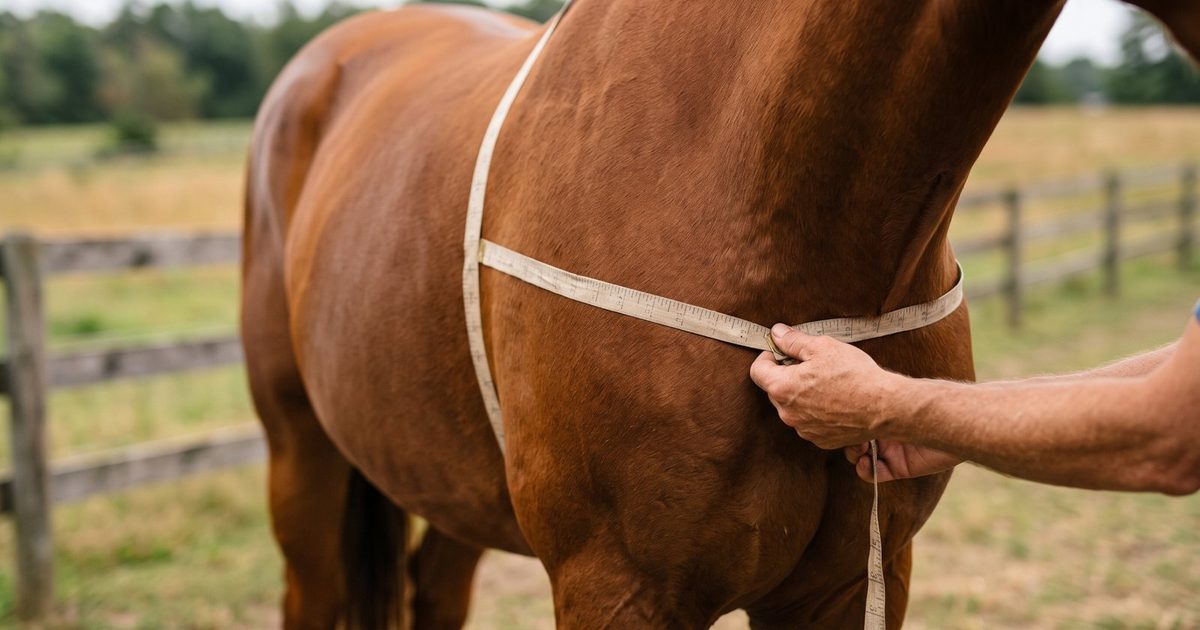
- Record a baseline weight with the horse weight calculator and note a body condition score.
- Book a routine wellness visit with your vet, including a dental exam. Sharp points or worn teeth make it harder to chew the extra hay winter requires.
- Ask your vet about your horse's vaccination and parasite control plan for the season.
Once the winter coat grows in, you can no longer judge condition by eye. Run your hands over the ribs, withers and tailhead every week or two.
2. Plan and store enough hay
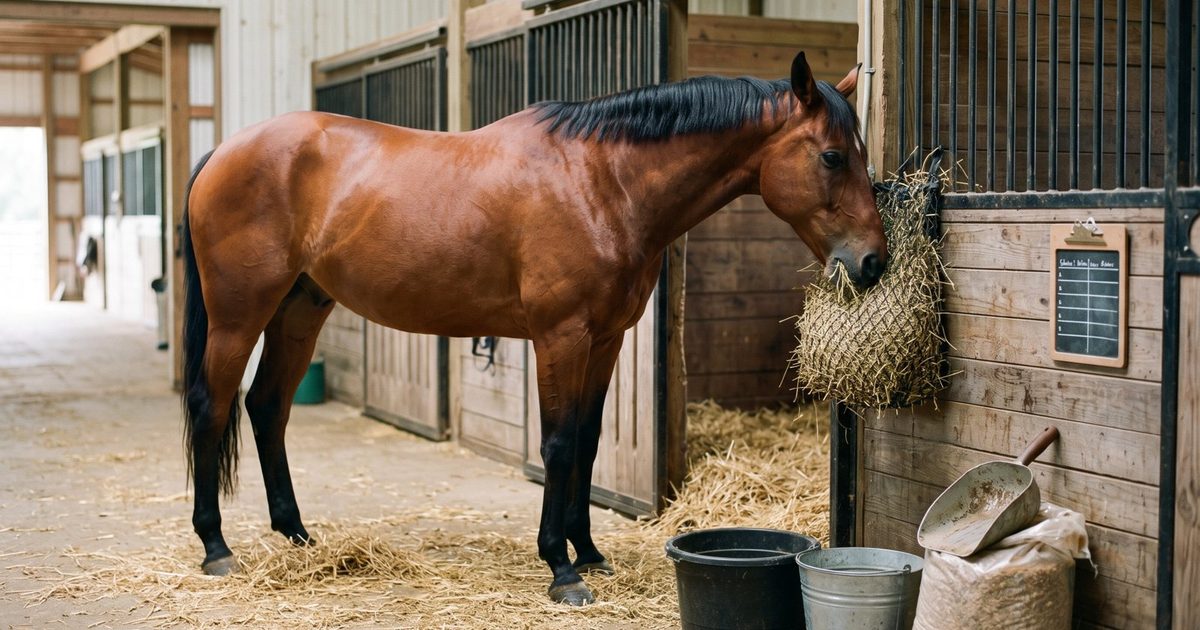
Forage is the horse's internal heater. Fermentation of fiber in the hindgut produces a lot of heat, which is why extra hay helps horses stay warm far better than extra grain. Many horses need noticeably more forage in cold weather, especially when it is wet and windy.
Work out how much you need
Use the hay calculator with a slightly higher forage percentage for the coldest months. Example: a 1,000 lb horse at 2.2% plus 10% waste needs about 24 lb a day. Over a five month feeding season (about 152 days) that is around 3,650 lb, or 73 small bales of 50 lb. Two horses would need about 146 bales. Add a buffer of 10 to 20% for a long winter, which brings two horses to roughly 160 to 175 bales.
Store it well
- Keep hay off the ground on pallets, under cover and with good ventilation.
- Never store hay that feels warm, damp or smells musty; wet hay can heat and, in rare cases, catch fire.
- Buy from a consistent source where possible to avoid frequent changes, and introduce any new hay gradually.
3. Keep water flowing
Dehydration is a real winter risk. Horses often drink less when water is icy, while dry hay increases their need for it. Reduced water intake is associated with a higher risk of impaction colic.
- Break ice at least twice a day, or use heated buckets, trough heaters or insulated waterers. Check electrical equipment and cords for damage and keep them out of reach of curious mouths.
- Many horses drink more when the water is not freezing cold.
- Keep salt available to encourage drinking.
- Check automatic waterers daily; they can freeze or fail without any visible sign.
The water intake estimator gives a general idea of how much your horses may need, so you can size buckets and troughs. If your horse is drinking much less than usual, passing fewer or drier droppings, or shows any sign of colic, call your vet.
4. Shelter and turnout
A horse with a dry coat tolerates cold well; wind and rain together are what really chill it. Provide a run-in shed, a stable or at least a solid windbreak such as a thick hedge or tree line. Make sure every horse in a group can get inside, since dominant horses sometimes block the entrance.
Turnout remains important for joints, digestion and mental health. Plan for mud and ice: gravel or hardcore around gateways and troughs, a sacrifice paddock to protect fields from poaching, and sand or grit on icy walkways. Our pasture stocking rate calculator explains why resting fields over winter pays off in spring.
5. Decide on blanketing
Whether to rug or blanket a horse is one of the most debated barn topics. There is no single rule, but these factors commonly guide the decision:
| Blanket is more likely to help | Blanket is often unnecessary |
|---|---|
| Horse is clipped for winter work | Full natural winter coat |
| No access to shelter in wind and rain | Good shelter and plenty of hay |
| Thin, elderly or unwell horse | Healthy adult in good condition |
| Horse recently moved from a much warmer climate | Horse acclimatized to local weather |
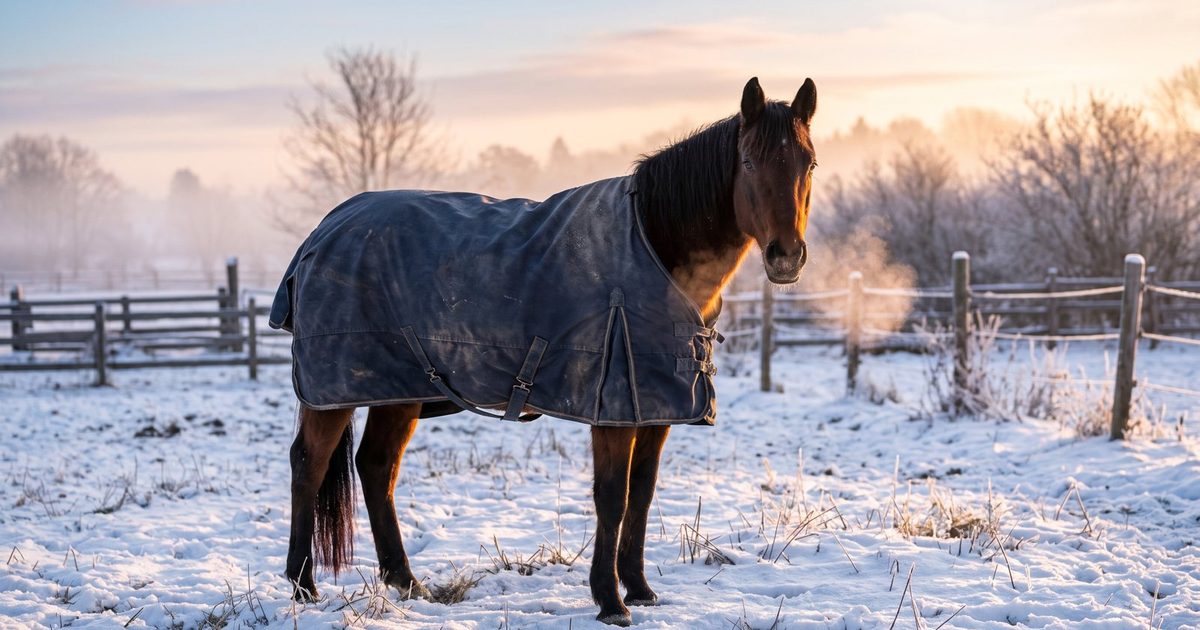
If you do blanket, fit matters. Check daily for rubbing at the shoulders and withers, and remove the blanket regularly to look at the horse underneath. Overheating is a real risk: if the horse is sweating under the blanket, it is too heavy for the weather. A wet blanket on a cold day can be worse than none at all, so keep a spare.
6. Winter hoof care
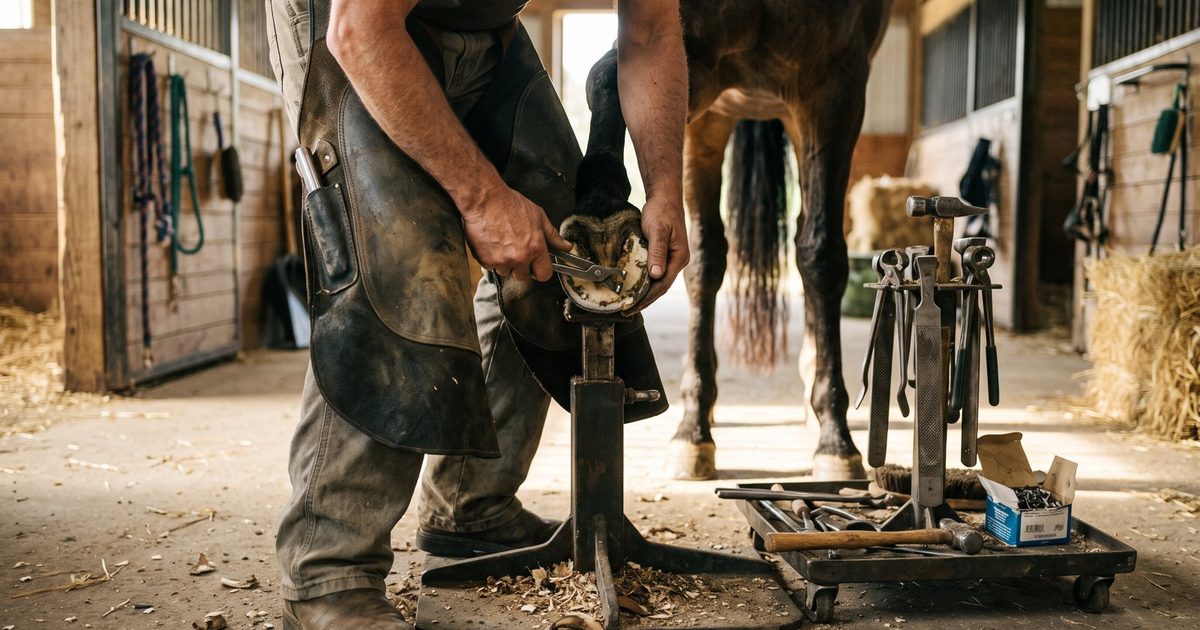
Hooves often grow more slowly in winter, but regular farrier visits remain important. Wet, muddy conditions encourage thrush, so pick out feet daily and give horses a dry place to stand. Snow can pack into the sole and form ice balls, particularly in shod horses; talk to your farrier about options such as snow pads or going barefoot for the winter. See our hoof care and farrier guide for more detail.
7. Extra care for senior horses
Older horses often find winter harder. Common challenges include worn teeth, which make long-stemmed hay difficult to chew, a harder time holding weight and stiffer joints in the cold. Practical steps include:
- A dental check before winter and a feeding plan agreed with your vet if chewing is a problem; soaked forage-based feeds are often used.
- More frequent weight and condition checks, every two weeks if possible.
- Good shelter and, where needed, a well fitted blanket.
- Gentle daily movement to keep joints mobile.
8. Prepare the barn and yourself
- Check roofs, gutters, doors and fencing before storms arrive.
- Keep a winter kit: spare buckets, ice-breaking tools, headlamp, extra blanket, grit or sand.
- Have a plan for power cuts and road closures, including a few days' reserve of hay and water.
- Post your vet and farrier numbers where every caretaker can see them.
FAQ
What temperature is too cold for a horse?
There is no single number. Healthy, acclimatized horses with a full coat, shelter and plenty of hay often cope with well below freezing. Wind, rain, age and condition make a bigger difference than temperature alone.
Should I feed extra grain in winter?
Extra hay is usually the first step, because digesting fiber produces more heat. If a horse still loses condition on more hay, discuss feed options with your vet or nutritionist.
How can I tell if my horse is cold?
Shivering, a tucked tail, standing hunched with the back to the wind, and cold ears and body under a wet coat are common signs. Check under any blanket too.
Is it safe to ride in winter?
Yes, with care. Avoid icy footing, warm up gradually, and cool the horse out fully before turnout, since a sweaty coat loses its insulation.